
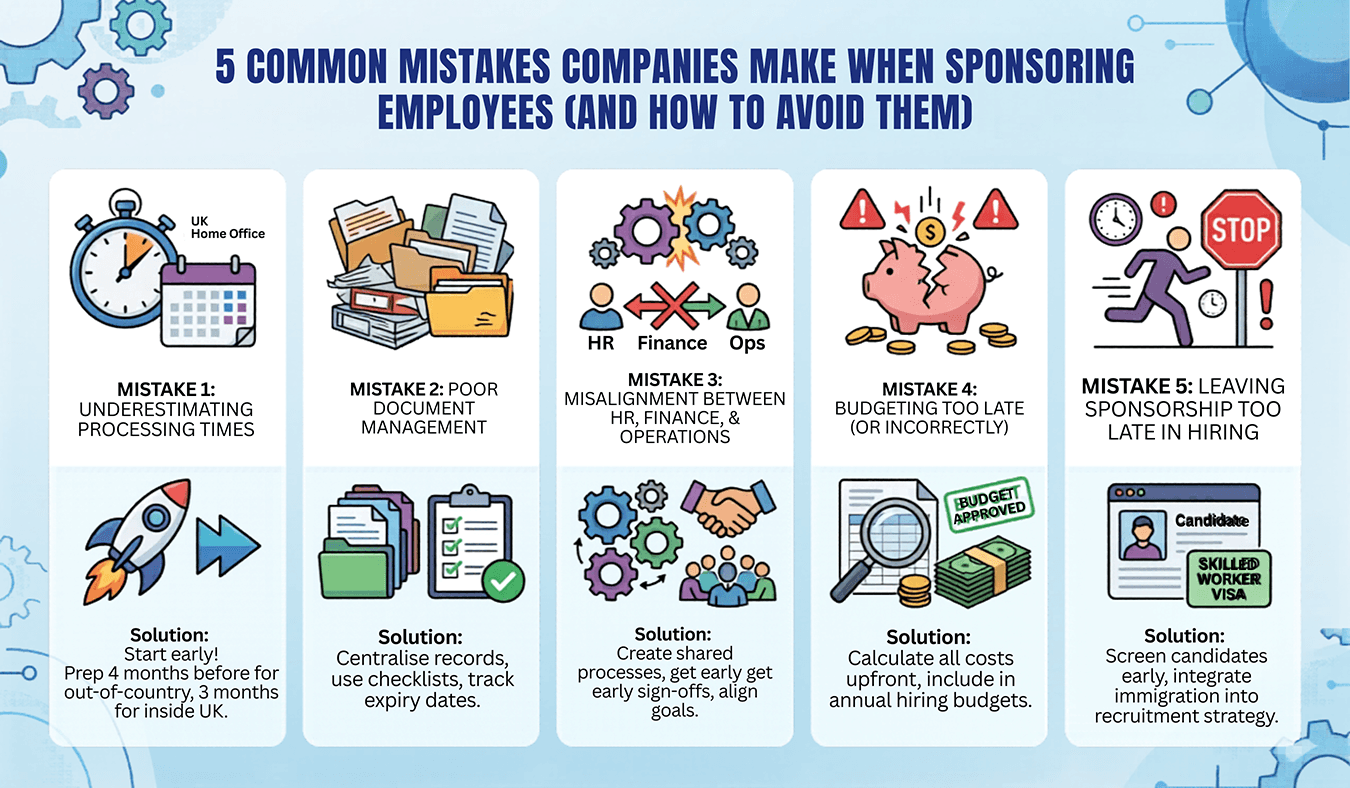
Hiring a skilled worker for your company is a way to unlock growth and business productivity. However, in the hiring process, the company can lose time, money, and compliance footing, as well as many other things.
So here are the five most common mistakes you can avoid.
1. Underestimating Processing Times
Companies assume that the visa processing times work exactly like the standard hiring times, which is not the case. In reality, the Home Office processing times can be predictable, especially on applications from outside the UK, as well as the delay in the decision once the application has been submitted to the Home Office. Applications made to the Home Office within the UK can take up to 8 weeks from the date of the application to get a response. One way to overcome this is to start the immigration process before the onboarding stages, so for an out-of-country applicant, preparation should start about 4 months prior. If the candidate is inside the UK, this can be around 3 months prior, which means preparation is key for a smooth start.
2. Poor Document Management
We all know that keeping clear and detailed documentation for staff up to date can be extremely difficult. However, this information should be part of an ongoing process. Missing right work evidence, inconsistent record keeping and expired documentation all contribute to a failed Home Office audit. These compliance breaches lead to huge fines and even sponsor licenses being revoked. Instead, focus on centralising all employee records and create a standardised document checklist that can be used across staff members. Another important tip is to use a tracking system for expiry dates and visa renewals to stay on top of the process.
3. Misalignment Between HR, Finance, and Operations
When HR, finance and the operations departments collide, it can be very difficult to see a resolution. HR tend to focus on hiring speed, as they need someone to fill a role as soon as possible. Finance focuses on the cost to the company and tries to see the best way the company can benefit. Lastly, the operations handles the day-to-day backend process, such as production and logistics. When all these departments overlap, last-minute firefighting can occur, bringing to light delayed approvals and budget surprises. In order for a cross-functional process to occur, the best way to overcome the surprises is to create a shared process for all sponsored hires, including finance, so that they can sign off early on the total cost, and all departments are kept in the loop.
4. Budgeting Too Late (or Incorrectly)
Sponsoring a skilled worker is not an easy feat, as there are several costs involved for both the sponsor and the migrant and in some cases, the company only see the visa fees and ignores the full financial picture. Instead, it’s best to calculate all the costs upfront and build the sponsorship process into the annual hiring budgets. The sooner you plan, the fewer surprises manage in the future, a crisis averted.
5. Leaving Sponsorship Too Late in the Hiring Process
Lastly, when you have a candidate in mind and you are ready to sponsor the candidate, the process can be rushed, and that is when mistakes happen, leading to rushed decisions and increased error. Alternatively, the best course of action is to screen candidates early, identifying their visa requirements and incorporating the immigration process into the recruitment strategy.
We’re here to help you avoid these common sponsorship pitfalls and keep your recruitment moving. Vira International supports employers with sponsor licence applications, Skilled Worker visas, and ongoing compliance through audits, practical guidance, and HR systems that strengthen record-keeping, tracking, and audit readiness. If you’d like to discuss an upcoming hire or review your current process, get in touch with Vira International.
